Ashtanga Yoga and Menopause
thirty years of daily practice and finding joy in simplicity
by Philippa Asher
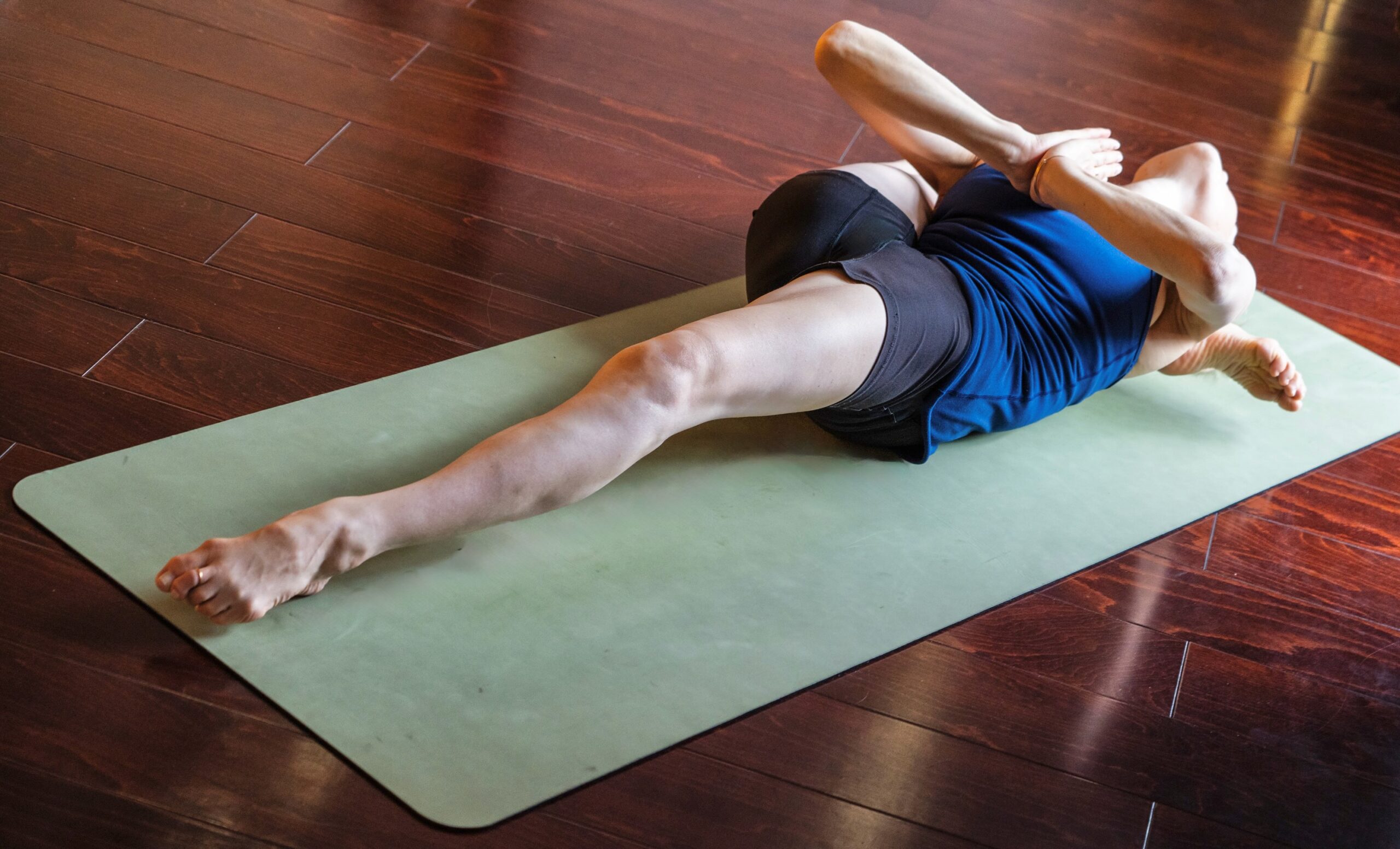
This article is written from the perspective of a fifty-something female Advanced B Certified Ashtanga yoga teacher/practitioner, who learned four Ashtanga asana Series and a bit of Advanced C from her male teachers Pattabhi Jois and Sharath Jois in Mysore, India (and who has had the privilege of teaching hundreds of Ashtanga yoga practitioners of all ages and experience internationally, for over twenty years).
I’m going to say it, women in their fifties are amazing. Many have parents who grew up during the Second World War and are in their nineties now. Resilient and principled, but with dementia or other conditions that require full-time care. Some may have lost a parent and have had to sell the family home to pay for the other parent’s care, whilst quietly grieving, dealing with ongoing admin and having little emotional or practical support. They might have retired siblings who shy away from responsibilities, whilst feeling empowered to judge. They might have kids who demand hours of attention, or family members who are deeply unkind. They may be in a marriage that isn’t working, or have gone through a traumatic divorce and lost everything, yet somehow keep their head above water, so that they can continue to work full-time and support themselves and others. They may have lost their remaining parent, organised a second funeral and feel alone and numb, or have health conditions that they downplay, so as to keep joyful. None of this planned, yet navigated, whilst silently going through menopause.
Generally occurring between the ages of forty five and fifty five, menopause happens precisely one year after a woman’s final period. For many women it’s during their early fifties. A varied menu of delicious symptoms can entertain her during the run up to this milestone (during perimenopause), but the real joy happens at the grand finale. I was mainly charmed by migraines, insomnia and joint pain, which I attributed to stress from ingredients peppered in the first paragraph. But when a friend suggested trying combined HRT patches (oestrogen and progestogen), within a couple of weeks I realised that hormones closing up shop was also a major player. Hormone Replacement Therapy isn’t everyone’s cup of Early Grey, but being able to sleep for eight hours a night and not waking up with a migraine is life changing.
Other symptoms might include hot flushes, night sweats, tingly skin, brain fog, anxiety, mood swings, dizziness, exhaustion, breathlessness, palpitations, changes in appearance, sensitive teeth, inner ear problems, hair fall, muscle aches, muscle loss, weakened bones, chronic inflammation, being prone to injuries, lack of concupiscence, UTIs and most baffling of all, the bladder seemingly shrinking to the size of a walnut!
So how can we practise yoga to help deal with the symptoms of menopause and enjoy inner peace and balance?
In the Yoga Sutras, Patanjali expresses that consciousness is comprised of mind, intelligence and ego. The mind uses the senses to interface with world around us; our intelligence interprets what our mind has put it’s attention to (based on previous knowledge and available information) and then our ego sees that thing in relation to ‘I’, or the false self.
He defines yoga as the cessation of fluctuations of the mind. Fluctuations (vrittis) can be caused by fantasy: imaginary conversations or playing out scenarios that aren’t real; dreams: attempting to make sense of them; memory: replaying the same record, or misremembering and doing the same; relentlessly going over things that are true; or obsessing over things that are untrue. The vrittis can cause the mind to stay in the non-yogic states of distraction, agitation and stupification, so that our consciousness is not aligned with the truth. The whole point of the yoga practice is to strengthen the mind and different ‘systems’ within the body, so that we can see the true nature of reality and not be unbalanced, or in a state of ‘dis-ease’.
A great example of a metaphor about the conflict of the mind and conquering it, so as to do difficult things in a balanced way, is the Bhagavad Gita. In this allegory about the struggles of human life, Krishna defines yoga as having a balanced state of emotions; a balanced state of thoughts and intellect and a balanced state of behaviour. Through purification of the mind and senses, we become discerning, rather than attached. With non-attachment, lies freedom, liberation, moksha.
In the Yoga Sutras, as well as sharing with the sadhaka that yogas citta vritti nirodhaha (yoga happens when fluctuations of the mind cease), Patanjali also offers that dhyana heyas tad vrttayah (those fluctuations are overcome by meditation), ie keeping the mind still. About asana, he says very little: sthira sukham asanam (asana should be steady, comfortable and joyful); prayatna saithilyananta sama pattibhyam (asana is perfected when effortless and the mind is fixed on the unlimited) and perhaps most importantly, tatah dvandva anabhighata (with perfection of posture, comes the cessation of disturbances caused by dualities), ie there is balance. Both the Bhagavad Gita and the Yoga Stutras emphasise the importance of being balanced.
Patanjali reveals that through the practise of Ashtanga yoga (ie living in accordance with the Eight Limbs described in the Yoga Sutras), we can cultivate the skills to control our emotions and behaviour and thus develop inner strength and resilience, so that when life is challenging, or we are knocked off balance, we have the courage to stand up and gracefully carry on.
The Eight Limbs of the Ashtanga yoga system are aspects that work together, to help lead us towards the state of yoga. Thus, for the yoga practice to work, all Eight Limbs need to be embraced into daily life and if one aspect is ignored, the opportunity for peace, simplicity and reaching the state of yoga will be lost. When the practise of all Eight Limbs is part of daily life, the yoga becomes the guru and within that, there is balance and joy.
Given that the Yoga Sutras and their commentary were compiled over two thousand years ago, probably by a man (or a collective), in a context that is very different from ours today, it seems logical to embrace the essence of the Eight Limbs in a manner that can serve us in a wholesome way, today. When navigating menopause, their wisdom is actually a lifeline.
1. The five ethical restraints (yamas)
Non-violence (ahimsa) This covers an ocean of interpretations, but violence in any sense can’t be deemed yogic: losing control of one’s emotions and behaviour; harming oneself or others; bullying, cancelling, shaming, being unkind; killing things; eating anything with a central nervous system; attempting asanas that the mind, body and breath are not ready for; executing asanas in a violent way, without tristhana, balance and stillness; leading a life without grace, courage and dignity for example. By cultivating poise and discernment, we can train ourselves to take a breath, control our emotions and behaviour and hopefully refrain from acting/reacting impulsively.
Truthfulness (satya), very important for the practice of yoga: not being false or deceptive. Not inventing situations, manifesting harm to others through lies, slander or libel; pretending to be what you are not. Leading an honest life without delusion, or creating chaos for oneself to others. Allowing the true essence of reality to be seen.
Non-stealing (asteya), this might seem self-explanatory, but as well as not acquiring things without righteous acquisition, can also include not taking people’s time, energy, attention, property, ideas, identity etc. When one becomes more aware of how precious their own time is, their tolerance for engaging with time-wasters, attention-seekers and energy-stealers diminishes. This is a good thing, as when mind becomes more discerning and strong, it is moving away from the non-yogic states.
Preserving one’s vital essence (brahmacharya), so that spiritual capability may be more easily attained. Perhaps in today’s context, it might include controlling the mind, senses, desires and behaviour, so that by being restrained and responsible with one’s sexual energy, the other yamas are a part of brahmacharya.
Non-possessiveness (aparigraha), only having what you actually need and not coveting what is unnecessary. By decluttering, simplifying, not hoarding, and clinging to things and people, we learn the value of non-attachment. Nothing is permanent, so by having less and being self-sufficient, when things are no longer with us, we have the resilience and strength of mind to manage without them. This can help lead to spiritual liberation and freedom.
2. The five self observances (niyamas)
Cleanliness (sauca), of body, mind and speech. Obviously keeping the physical body as pure as possible, free from toxins both inside and out. Also not polluting the mind with dark thoughts, the body with harmful junk, or using poisonous language to communicate. Through daily purification in all aspects of life, our physical, mental and energetic bodies can become balanced.
Contentment (santosha), with what one has and living in a place of joy. Being replete and grateful for what we have. Not craving more, or being envious of others and what they have.
Austerities (tapas), disciplines to remove impurities. Cultivating one’s inner fire to burn away mental and physical impurities, so that spiritual transformation may be nurtured. Having the discipline to live in accordance with all Eight Limbs and practising asana, pranayama and meditation daily, to keep the mind, body and energetic system pure.
Self-study (svadhyaya) learning and comprehending the true meaning of the yoga scriptures and applying their teachings to everyday life. Understanding one’s true nature beyond the superficial self; introspection, reflection and observing one’s mind and behaviour, on and off the mat, so that we can evolve and reach a higher state of self-awareness.
Surrender to the universal consciousness (ishvara pranidhana). Moving beyond the false self and having faith without expectation, to do challenging things without any idea of the outcome. This trust and belief in something bigger than us, can lead to connection with the true self, peace and liberation.
3. Asana
Postural practice with synchronised slow breathing and fixed gaze points: to detoxify, balance, open and strengthen the body, mind and nervous system. Through moving the body slowly (without distraction) and holding postures with a fixed gaze and controlled breathing, blockages can be removed, preventing toxins from accumulating. The vital energy (prana) is preserved, allowing the body, mind and nervous system to become balanced. By having a precise sequence of asanas that is practised regularly, the mind, body and breath strengthen, so that the practice can transform into a moving mediation.
4. Pranayama
Prana is the vital electrical, electro magnetic, electro chemical energy that floods through different channels of the body and energy carrying molecules like glucose and ATP. It is carried in blood vessels, nerves, lymph vessels, nadis (subtle energy channels) and cleans/regulates the nervous, circulatory, digestive and respiratory systems and balances endocrine system.
Pranayama practice is concerned with breath control, expansion and retention. Slow controlled breathing strengthens the mind, body and breath so that prana can move freely around mental, physical and energetic bodies without stagnation or blockage. Undigested experiences and emotions, accumulate in the physical and emotional body. This stagnation causes blockages, which result in physical and mental illness or ‘dis-ease’. Deep conscious breathing through the nostrils into the lungs, helps to control the circulation of prana, oxygenate the blood (so that oxygen is delivered to all cells in the body) and to remove physical and emotional blockages.
5. Pratyhara
When we consider that the mind uses the senses to interface with the world around us, by controlling and withdrawing the senses from external stimulation, we can invite the mind to settle. To optimise conditions for purification and non-attachment of the senses, the vital energy that is absorbed through the sense organs should be harmonious (satvic), rather than dull (tamasic), or chaotic (rajasic). Sensory overload and reliance on hyper-stimulation of the senses, causes the mind to be in the non-yogic states of distracted, agitated and stupefied. Being in nature, enjoying fresh air and calm away from distraction, gadgets and pollution, draws the mind towards the yogic states of focus and stillness.
6. Dharana
Concentration of the mind, focusing the attention on a single thing, without distraction. For example in the asana practice, mentally hearing each Sanskrit vinyasa count, as the movement changes; focusing the gaze on the precise drishti; keeping the flow of the practice without interruption; training the mind to be centred and strong, rather than scattered and distracted. Repeating mantras or japa can help eliminate vacillating thoughts, by focusing the mind and stimulating internal awareness which reverberates throughout body.
7. Dhyana
Meditation: focusing the mind on a single entity for an extended period, which can result in becoming mentally clear and emotionally calm. Our conscious awareness, mind, intelligence and ego, are still. By steadily focusing one’s attention towards a single point (for example an external or internal object or light), the unbroken concentration can lead towards realisation of the true self. Techniques for meditation might include sitting comfortably, centring oneself and breathing slowly through both nostrils, focusing awareness on the breath and surrendering, without giving attention to thoughts which try to cause distraction. Certain dynamic seals might be used (such as jnana mudra), to help stimulate the brain into feeling peaceful.
8. Samadhi
A higher state of conscious awareness (whilst still in the physical body), where the mind goes beyond the object of meditation and the individual self. Concentration on the object of meditation is so intense, that it fills one’s consciousness so no thoughts happen; a state of pure tranquility and meditative absorption with that which is bigger than us (a universal consciousness). Oneness: absorption of True Self with Universal Spirit.
–
The Eight Limbs described in the Yoga Sutras, form the basic principles of the dharmic way of life for an Ashtanga yoga practitioner. The aim is to connect with pure consciousness (purusha) and to be free from the delusion (maya) that the nature of our mind (prakriti) causes.
Possibly the most magnificent aspect of being post menopause, is that mind becomes stronger and naturally veers away from the trivia, noise and malice that makes it challenging to connect with the Eight Limbs. Simplicity and peace have way more appeal than clutter, compilation and chaos. That which used be irksome, melts away more easily. Time wasters and attention-seekers fade into the background, as we cultivate where to place our attention. As our ability to feel compassion grows, we become less self-centred and the yogic states of being focused and still, become one’s happy place. The Dalai Lama teaches that, ‘the purpose of life is to be happy.’
I find the acronym NEURO helpful for maintaining the menopause happy place:
Nutrition – Obviously a nutritious, healthy and balanced diet is essential for facilitating the body and mind to be in tip-top condition. Also is it vital to have a healthy relationship with food and to understand its effects on the mind and body. Food is fuel and will serve us well if the quality and amount is optimal for our individual selves. We are all different and what it right for one person may not serve someone else. Hopefully by the time menopause happens, we will have a sound idea of what keeps us balanced and what throws us off. Generally in menopause, it is helpful to avoid processed foods and anything refined or tamasic. Consuming high quality, locally sourced, organic produce, that is rich in nutrients, minerals and vitamins is ideal. Many find that a diet which is predominantly high protein and high fibre plant-based, allows nutrients to be absorbed efficiently and digestion to be smooth.
Exercise – As we age, our bone density decreases and muscles weaken. In order to prepare ourselves for dotage, it is vital to keep the body strong and supple in menopause. Exercise that involves the whole body: stretching, weight-baring, resistance and balance, can help strengthen bones, lubricate joints and allow muscles to grow and lengthen (thus becoming more efficient, improving metabolism and reducing chances of injury).
The Ashtanga asana system with its vinyasas and sequences that work holistically on the body: requiring equal levels of strength, flexibility and balance, is a wonderful menopause practice. The way we execute asanas and vinyasas might change though (more about ‘how to practise’ later!)
Unwind – Going back to the first paragraph, in order to navigate the plethora of obstacles that appear in our path during our fifties, learning how to manage stress is vital. Increased cortisol levels can exacerbate menopause symptoms. Cortisol is often referred to as the ‘stress hormone’, so if we can reduce levels by practising slow focused breathing, going for walks in nature, decluttering the mind and making meditation part of our daily routine, our mental health can be served as well.
Restorative sleep – Having good quality sleep which allows the body and brain to repair and recharge is often extremely difficult in menopause, due to hormonal shifts. Menopause insomnia can lead to to mood swings, anxiety, brain fog, irritability and difficulty in functioning. Nutrition (including reducing caffeine and alcohol levels); Exercise (to reduce night pain); Unwinding (to reduce stress); going to bed at a sensible time; not looking at screens before hand and sleeping in a peaceful, well ventilated, cool dark room, on a comfortable bed, can enhance sleep quality. HRT to balance estrogen and progesterone levels, might also help.
Optimising cognitive performance – The brain is a complex organ that needs superior cognitive nourishment into order to flourish. By feeding it with enriching information and being mindful about where its attention is placed, the brain can be stimulated in a healthy way. Mental stimulation through problem-solving, puzzles, engaging in both motor and cognitive skills, maintaining regular inspiring in-person social connections and activities, learning new things to enhance focus and memory and being mindful in our pursuits, can help with brain health and neuroplasticity. Through having a holistic approach that focuses on brain-boosting habits, regular exercise, a nutrient-rich diet, sufficient sleep, stress management and meditation, we can re-wire the brain to abandon bad habits and things that take us to a dark place, whilst helping to improve focus, memory and cognitive flexibility.
So, those of us who have been practising Ashtanga yoga for thirty years, will know that it is an invaluable tool for developing resilience, keeping the mind and body strong and flexible and for making life a bit easier. As we age, we evolve, adapt and make changes and this too applies to the asana practice.
Pattabhi Jois was clear that for the first seven years of our Ashtanga asana journey, we are new practitioners: trying to absorb and do as much as possible, but unaware of how little we know about Ashtanga yoga (and how much more there is to know). With years of daily practice, the mind, body and breath are cleaned and strengthened and the other limbs organically become part of our lives. As we become more balanced the asanas become part of us. We know them and can feel when they are at ease and when they are not. Eventually we appreciate the purpose of asana and that it is not a spectacle of body contortions, but is designed to purify, balance and align the mind, the body and the breath: tristhana being a key component of the Ashtanga asana system. Along with this perfect synchronisation of the mind (precise drishti), body (asana with good technique) and breath (slow equal inhalations and exhalations through the nose), we hear the bespoke Sanskrit vinyasa counts as we practise. This is the same for new and established practitioners and is the essence of the Ashtanga asana system.
Whether we have completed the Advanced B Series with Pattabhi Jois and Sharath, or are working on Half Primary Series, they way we execute the postural practice should be the same. Our attention is focused on tristhana and hearing the precise vinyasa counts. When Pattabhi Jois said to us (many times) in conference, ‘Some people can reach samadhi from practising until Navasana,’ what he meant was that some people ‘get’ the practice and how to reach the state of yoga, without needing to do a lot of asana. Others will spend years attempting to master heaps of Series, but may still not know yoga. This makes a lot of sense after completing four series and suddenly realising that the postures are the same, so in actual fact, less is more. Patanjali’s three short shlokas in the Yoga Sutras, reveal the wisdom of asana, but it takes decades of asana practice to actually understand this!
So, with Patanjali’s ancient insight of the Eight Limbs and how to execute asana, we now need to use this framework to help guide us in 2026, with practising asana during menopause.
Firstly, it is normal to feel more comfortable practising with others who are also in menopause, rather than with those who have no experience of what it feels like be in a female body that has been through peri and post menopause. It is no coincidence that many of the Ashtanga yoga practitioners in my classes and retreats now (from new to Advanced B Series practitioners), are women over fifty. Strong, resilient, understated and dedicated, we work hard, laugh hard and don’t take ourselves too seriously. We unwittingly support each other and value what the practice gives us.
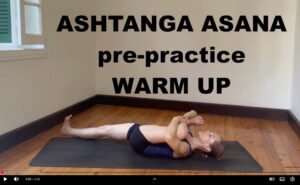
On a practical level, warm up before practice! In menopause it’s far easier to pull muscles and experience joint pain, so to spend ten minutes calmly and steadily opening the body, makes the practice easier, slows the breathing and focuses the mind.
I’ve devised a short pre-practice warm-up that focuses on calming the mind, slowing the breathing, opening the spine, shoulders, hips and lengthening the hamstrings:
To create a decent shock absorber for the joints, it’s sensible to have a really thick mat or two. A wide mat which is extra long is even better, so that all asanas stay on it!
A tranquil, uncluttered warm environment, with heaps of natural light and good ventilation is favourable, away from phones, gadgets and objects of distraction. Obviously a roof to provide shade and a clean level floor if the space is outside. Plenty of space between mats, if there is more than one practitioner. These two hours of practice time are sacrosanct!
Before going to bed, unwind, soaking the bones and muscles in a hot bath. Properly warming and relaxing tired muscles and sore joints, helps the blood vessels to increase in size, which in turn allows more blood, oxygen and nutrients to be delivered to the tissues (this also aids healing). When feeling depleted after working hard, it is vital to effectively recharge.
It is the ‘Sequence’ part of the Ashtanga asana practice that will most likely be adapted in menopause, but not necessarily. Some may enjoy practising as they did in their forties. Agency is important and the practice should serve us during menopause, allowing us to do what feels right: keeping us in a place of balance and joy.
It may seem appropriate to practise fewer asanas and to occasionally/often step in the half vinyasas. It is equally viable that if a practitioner has been working on the complete Primary and Intermediate Series throughout their twenties, thirties and forties, that they may happily continue post menopause, but perhaps in a less extreme way.
It is very likely that those practising Intermediate, Advanced A, or Advanced B Series post menopause (instead of going into the Series straight after Parsvottanasna), will enjoy completing the Standing Sequence. Utthita Hasta Padangusthasana, Ardha Baddha Padmottanasana, Utkatasana and Virabhadrasana A/B are too valuable for maintaining balance and leg strength to miss out!
For those who choose to continue practising the extreme Advanced Series asanas, reducing the amount executed each day might be a nourishing option. For example, rather than practising all of the Advanced A or Advanced B Series within their two hour window, perhaps just doing a third each day over three days and repeating asanas might feel more agreeable. When repeating asanas, often the third execution leads towards the state of yoga.
It might be the case that the ‘Sequence’ no longer serves the practitioner, so the asana practice simply becomes the beginning and end sections:
Warming up
Five Suryanamasaka As
Five Suryanamasaka Bs
Standing Sequence
Backbends
Finishing Sequence (followed by pranayama and meditation)
To be honest, that’s actually all we need to practise (but several times a week and slowly, with exquisite attention to tristhana and vinyasa).
Whichever approach feels appropriate (and it may continue to change over time), practising slowly, always focusing on the perfect synchronisation of breath, gaze point and movement, along with good technique and hearing the Sanskrit counts and embodying the essence of the Eight Limbs will remain constant.
Key things for the practice to serve us, will be using one’s body weight with slow, controlled, focused movements without straining joints, to lower cortisol, improve blood flow, reduce stress, inflammation and to ‘feel’ at ease. Focusing on weight-bearing and strength helps to maintain muscle, stamina and increase bone density.
Working on flexibility with sensible controlled asanas that focus on increasing mobility can help to improve joint lubrication, enhance circulation, reduce stiffness and pain and lessen the likelihood of injury. Being mindful of not being extreme is vital – wear and tear is inevitable after years of asana practice and cartilage does not grow back.
One of the most important qualities required to reach the state of yoga, is balance. As well as being steady and balanced in each posture (and in all senses of the word), a balanced state of mind boosts mood and supports both mental and physical wellbeing.
As life’s unexpected challenges reveal themselves and the abundance of menopause symptoms dance merrily in the background, the slow two hour asana and breathing practice becomes a truly cherished time, where every moment of stillness and inner peace is appreciated and never taken for granted. Coupled with leading a life that embraces a consistent Eight Limbed Ashtanga yoga practice that is: understated, peaceful, kind and simple, the philosophy of Patanjali’s yoga invites the journey through mid-life, to sail steadily with grace, elegance and balance. With this it becomes clear that the practice of yoga is the guru, the constant unwavering purusha. Everything else, the people, shalas, institutions, branded yoga mats, paraphernalia, podcasts and latest fads (which constantly change), are impermanent, prakriti.
‘Don’t let the behaviour of others destroy your inner peace.’
– the Dalai Lama
© 2026 Philippa Asher